EmailInstagramLinkedIn
Welcome to the World View.

The most interesting ideas happen at the intersection of different disciplines, experiences and knowledge. So, we try to have a wide view of world, are happy to hire from outside of advertising, and are always looking for novel connections.

General Release, April 2026

ATime&Place launches Digital Experience & Entertainment Practice (DEEP) to transform how brands connect with Gen Z and Gen Alpha

Independent creative agency ATime&Place has launched a new division, the Digital Experience & Entertainment Practice (DEEP), expanding its offering into brand-owned entertainment, end-to-end digital product development, customer experience design and gaming. 

From native apps and e-commerce, to loyalty and community experiences - DEEP brings together product, creative and technology capabilities to deliver a unique and timely offering to clients. 

The move comes as Gen Z and Gen Alpha consumers, expected to command a combined global spending power of more than $12 trillion by 2030, increasingly favour more interactive digital experiences over traditional campaign-led marketing - pushing brands to move beyond one-off activations and meet audiences where they already spend their time.

Matt Lawson, Chief Creative Officer and Co-Founder at ATime&Place, says the launch formalises a capability the agency sees as critical to modern brand-building. “We build worlds for brands, and create ideas that give those worlds a gravity to pull people in. So having real expertise in the digital environments that younger audiences inhabit and a greater ability to create immersive experiences and useful products, is an essential part of that. Our work now sits at the intersection of culture, community, content and commerciality. When you combine that with entertaining storytelling and innovative ideas, it creates a very powerful offering for brands.”

The practice will be led by newly appointed Head of Digital Experience Jasmine Hansen, who joins from eGEN, where she led digital product strategy and development for brands including e.l.f. Cosmetics and Adidas, and built proprietary platforms enabling brands to engage audiences within environments such as Roblox.

Prior to this, Hansen held senior product roles at Sportsbet and previously led the Dumb Ways to Die gaming franchise at Metro Trains Melbourne, bringing a mix of product, platform and entertainment experience to the role.

Hansen says the opportunity for brands lies in rethinking the role digital plays in driving both engagement and revenue. “Marketing at its core is about entertainment. Brands that build experiences people actively want to take part in - whether through loyalty, utility or entertainment - drive deeper engagement and stronger long-term value.

“These environments reward participation, and when done well, they don’t just build engagement, they increase retention, deepen customer relationships and unlock new commercial opportunities. Platforms like Roblox, with more than 151 million daily active users, are enabling brands to unlock entirely new revenue streams beyond their core business. It’s a compelling shift for CMOs, where marketing is no longer just an expense line item, but a generator of revenue.

"I’m genuinely excited to be joining ATime&Place at this moment. There’s a real ambition here to build this properly and, by combining a strong creative foundation with product and platform expertise, to create something incredibly powerful for clients.”
Hansen will work alongside Creative Director Chris Jovanov, who joined ATime&Place six months ago following senior roles at AKQA, R/GA, Leo Burnett and Clemenger BBDO. Jovanov says the combination of creative and product capability opens up new possibilities for brands.

“There’s a real opportunity here to build things people actually want to spend time with. That shift towards more useful, experience-led work feels right for where brands need to go. Having Jasmine’s product experience in the mix, alongside the broader team, means we can build things properly - not just creatively, but in how they work day to day.”

Lawson concludes: “Jasmine and our co-founder Adrian Mills built the Dumb Ways To Die games franchise together, which at its peak was generating multi-million dollar revenues through over 6 billion game sessions, so it’s great to have that team back together working on new problems and platforms.“

DEEP will help us create brand worlds with more depth, and meaningful entertainment experiences. The era of A.I and automation will for the most part mean more of the same in many more places, at a time when consumers aren’t just ignoring brands, but actively blocking them. So creating experiences people actually want to be a part of is essential for brands.”

DEEP launches across ANZ today.
Branding In Asia, March 2026

IWD Voices: ‘Meaningful Change Only Happens When We Move Beyond Intention and Take Action'

Next up, we speak with Sally Denniston, Head of Strategy at ATime&Place. In our conversation, Sally reflects on what this year’s IWD theme means to her — emphasizing the word “action” — and traces her path into the industry and the women who shaped her early career.
The theme for International Women’s Day 2026 is “Rights. Justice. Action. For ALL Women and Girls.”
What does this mean to you professionally and personally?
On both a professional and personal level, it reminds me that there is still more to do to achieve real equality. The word that stands out most to me in this theme is action. Whether that means actively supporting initiatives that remove barriers, or simply role-modelling positive behaviours in everyday moments, meaningful change only happens when we move beyond intention and take action.

It also reminds me that equality should never mean expecting everyone to follow the same path. Women and girls all have different ambitions and aspirations, and true equality means having the freedom and opportunity to pursue those paths in our own way. That is for ALL.
What first drew you to your industry, and was there a defining moment that set your career in motion?
Was there a role model who influenced you early on?
Honestly, I was drawn to the smart and creative people who were exceptionally good at what they did; and who seemed to have so much fun doing it. I still am.

I didn’t know much about advertising when I started, other than that Madison Avenue was its Wall Street/Fleet Street equivalent. If that was the pinnacle, then that’s where I wanted to be. I shaped my early career around that ambition.

Like many young people, I couldn’t really see myself in any of my older colleagues at the time. I was more focused on creating my own path. It’s only now, at this stage of my career, that I can recognise the influence of some remarkable women I worked with early on. Particularly those who worked alongside male colleagues with equal authority and influence.
How has your understanding of fairness changed as you’ve gained experience and seniority?
Earlier in my career, I had a very clear idea of what I believed was fair and just. Which often meant holding people to a high standard.

I’ve learnt that fairness isn’t about treating everyone the same. It’s about recognising context: the different pressures, responsibilities and starting points people bring, and creating environments where people genuinely have the opportunity to succeed as themselves.

But over time, experience and leadership have prioritised another dimension: empathy. I’ve learnt that fairness isn’t about treating everyone the same. It’s about recognising context: the different pressures, responsibilities and starting points people bring, and creating environments where people genuinely have the opportunity to succeed as themselves.
As conversations around women and work have evolved, what do you think has genuinely improved, and where do you think more attention and action are still needed?
One of the most encouraging shifts has been seeing more men actively engage in the conversation and take responsibility for progress. Awareness had to come first. Particularly the understanding that equality for women doesn’t come at the expense of men’s success.

The next step is normalising new behaviours. When male colleagues openly prioritise family, embrace flexible work, and speak honestly about balancing work, family and self, it signals that these choices are not exceptions; they are simply part of a healthy working culture.

If supportive work practices are only taken up by women, they will continue to be seen as women’s issues. Real progress happens when they become the standard for everyone.
Is there a project or initiative you’ve worked on related to women’s empowerment that you’re particularly proud of?
What made it meaningful to you?
In my previous role I was involved in conversations about perimenopause in the workplace. It was deeply meaningful to me because, until I experienced it myself, I had no real understanding of how much it could affect my ability to do my job well. And what surprised me most was how little it had ever been discussed at work – or anywhere for that matter.

Being part of efforts to de-stigmatise menopause, whether through policy changes or simply by talking about it openly, is incredibly important. If we can normalise these discussions now, the next generation of women won’t feel like they have to navigate it quietly or alone. They can be confident their workplace and colleagues will support them.
What responsibility do senior leaders have in shaping more equitable workplaces, beyond statements or policies?
If not them, who?

Culture is shaped by behaviour. What leaders actively support, challenge, prioritise and role-model becomes the norm.

What is one change you would like to see in workplaces for the next generation of women?

I would like to see supportive work practices become completely normalised for everyone. Flexible work, prioritising family, or setting boundaries shouldn’t be seen as accommodations for women: they should simply be part of a great workplace.

But just as importantly, women should feel valued not only for what they deliver, but for who they are and the perspectives they bring.

When these behaviours are embraced by everyone, the next generation of women won’t feel like they are asking for something different. They will be able to show up, do their best work, and be themselves.
Quick hits:

A trend you are excited about, or not excited about?
As a mother of teenagers, I’m really excited by the strength and openness of the next generation. They are incredibly aware of issues around fairness and equality, and they’re not afraid to talk about them. I love how naturally they challenge and moderate each other (and their parents) when something doesn’t feel right. I feel like they are going into adulthood with such good grounding.
A creative campaign or representation of women that inspired you or made you feel seen?
I’ve loved seeing women like Demi Moore and Pamela Anderson stepping back into the spotlight recently. It’s exciting to see them reclaiming space in the cultural conversation and doing interesting work. I do hope though, that the focus shifts more toward the quality of their work and the impact they’re having, and a little less on how they look!
A piece of advice that stayed with you longer than expected?
“Don’t be the person in the meeting who just offers tea and biscuits. Always have something to say – even if it’s just to agree with a point made. Get your voice in there.”
AdNews, February 2026

Young Guns: Jaya Abela at ATime&Place

In this series, AdNews spotlights young talent in the Australian media, marketing and advertising sector. This time it's ATime&Place's account manager, Jaya Abela.
Time in current role/time at the company?
I’ve been at ATime&Place since the agency’s launch in September 2024 – so, nearly a year and a half.
How long have you been in the industry?
I started my journey in advertising as a grad at Deloitte in the Creative, Brand and Advertising team back in 2022. And then moved across with my team to ATime&Place when our lead Partners Adrian Mills and Matt Lawson founded the agency. It’s been almost four years, and I’m grateful I’ve found an industry and role I’m so passionate about.
How did you get here? Was this always the plan?
I didn’t know what I wanted to do heading into University. I did an arts degree and studied a combo of ancient history, law, psychology and media/comms subjects. And for a while, I was set on being an archaeologist. But, I’ve always been a creative person and enjoyed problem solving. So I went on to do a Master of Marketing Communications and discovered the advertising industry was where I was meant to be.
Who is your right-hand person/who guides you day to day?
My right-hand person is Daniel Loukidis – ATime&Place’s Head of People & Culture, Group Account Director and all-round great guy. I’ve worked with Daniel since the beginning of my advertising career. He’s taught me how strong relationships and collaboration across clients, agencies, and creative and production teams are what lead to great creative work and meaningful client impact.

We work together on a number of clients, and I’m grateful to work with someone who supports and backs me everyday, while challenging me and creating opportunities for me to grow and learn more.
What’s the best thing about the industry you work in?
The people. I love the diversity of thinking and creative problem solving that each person brings each day to the office, and that you see across work in the wider industry.

It’s also an industry where people are genuinely interested in helping you to develop and expand skillsets. And one where we celebrate each other’s successes.
And the biggest challenge?
One of the greatest challenges for the advertising industry right now is keeping up with the speed and scale of the always-on content cycle. Clients are increasingly prioritising social, and looking for authentic, targeted content that can be produced quickly and cost-effectively – while still delivering real impact. We’re taking this as an opportunity to leverage new tools and technology like AI and develop new ways of making content. All while ensuring we don’t compromise our creative-led approach.
Whose job have you set your sights on in the future?
In 2024, I attended the London International Awards as a Creative Liaison and had the chance to hear inspirational leaders share their journeys, their creative work and how they make a lasting impact. In the future, I hope to step into a role like theirs – helping to shape the advertising industry and contributing to creative work on a broader, global scale.
Where do you turn for inspiration?
I find inspiration in lots of different places. From something I’ve read in a book, to artwork in a gallery or things I’ve come across in my day-to-day life. I also find inspiration in people I’ve spoken to; colleagues, industry connections. In a more traditional sense, I enjoy browsing award sites in my spare time and watching case-studies on creative work from around the globe.
Tell us one thing people at work don’t know about you?
I’ve played piano and cello since I was five. And I used to compose my own songs for fun.
In five years' time I'll be?
I’m happiest in an environment where I’m challenged – learning new things and solving new problems. In five years, I hope I’m still growing, surrounded by people who inspire and push me to be my best, and in a role where I can support others in their growth as well.
Campaign Brief, February 2026

Hot Suit Takes: Adrian Mills, CEO at ATime&Place

CB Hot Suit Takes is our new Q&A series for extremely busy CEOs and senior leaders across the industry ~ covering careers, creativity, challenges and the song that sums it all up.
What made you get into advertising?
1993. Melrose Place (the show, not the street in Werribee). D&D Advertising was home to televisions drama’s hottest creative talent, with Amanda, Billy and Alison steaming up the screen and the L.A advertising scene. I was young, impressionable and in hindsight, irresistibly drawn to the idea of working with ruthless, narcissistic sociopaths.
Which piece of work are you most proud of, and why?
In 2012 at McCann, we coined the word “phubbing”, now in the Cambridge and Collins dictionaries and the subject of hundreds of PhDs. So when it comes to the “fathers of the English language” you’ve got Chaucer, Shakespeare, Millsy…

What’s the biggest challenge you face in your role right now?
Trying to finish the renovation of our office. We should have bought a building like Howie.
What’s the most recent thing you’ve learned – professionally or personally?
Nothing divides an agency faster than a shared Spotify playlist.
What song best sums up your career so far?
Dumb Ways to Die. It’s opened a few doors.
Campaign Brief, December 2026

Human vs AI debate finds human creativity doesn’t just survive in the age of AI – it leads

AI accelerates, but humans navigate. That was the conclusion of an industry-first debate between a leading Australian creative and AI, held recently to discuss one of the most pressing questions facing today’s marketing and creative industry: is human creativity replaceable?
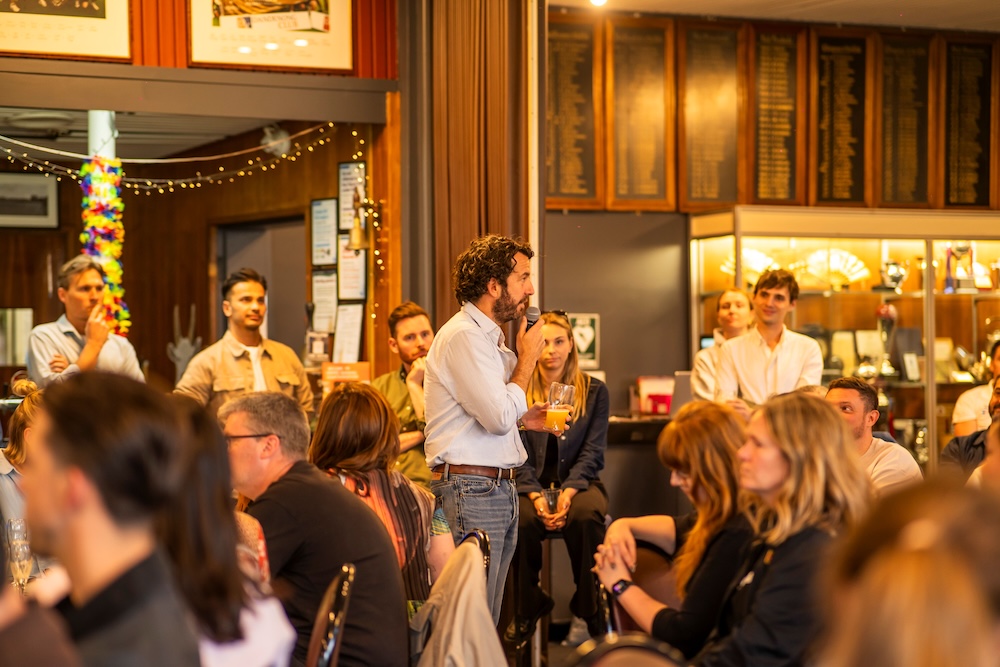
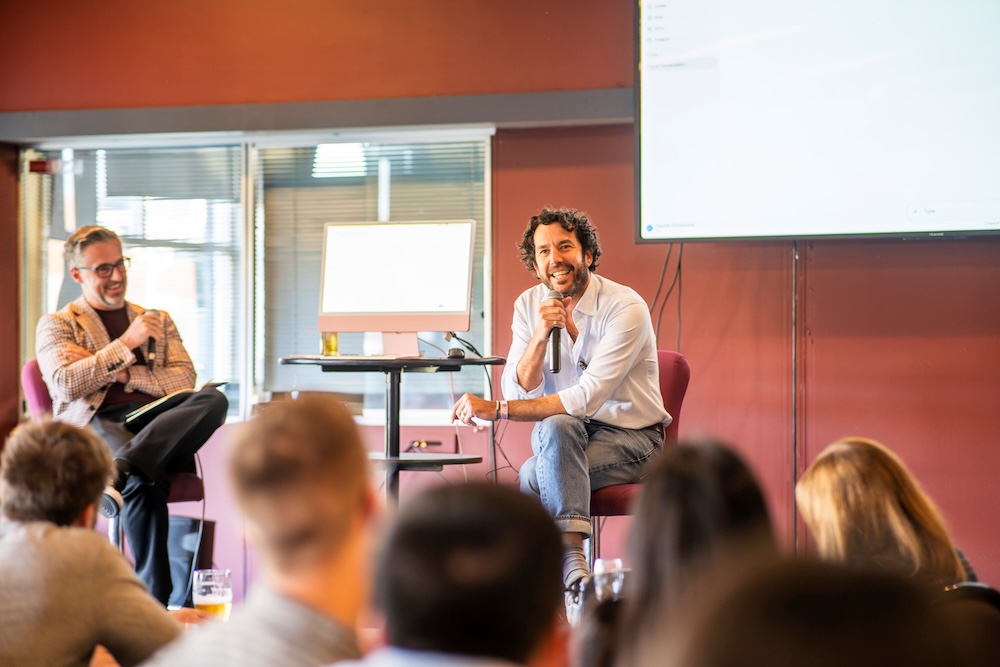
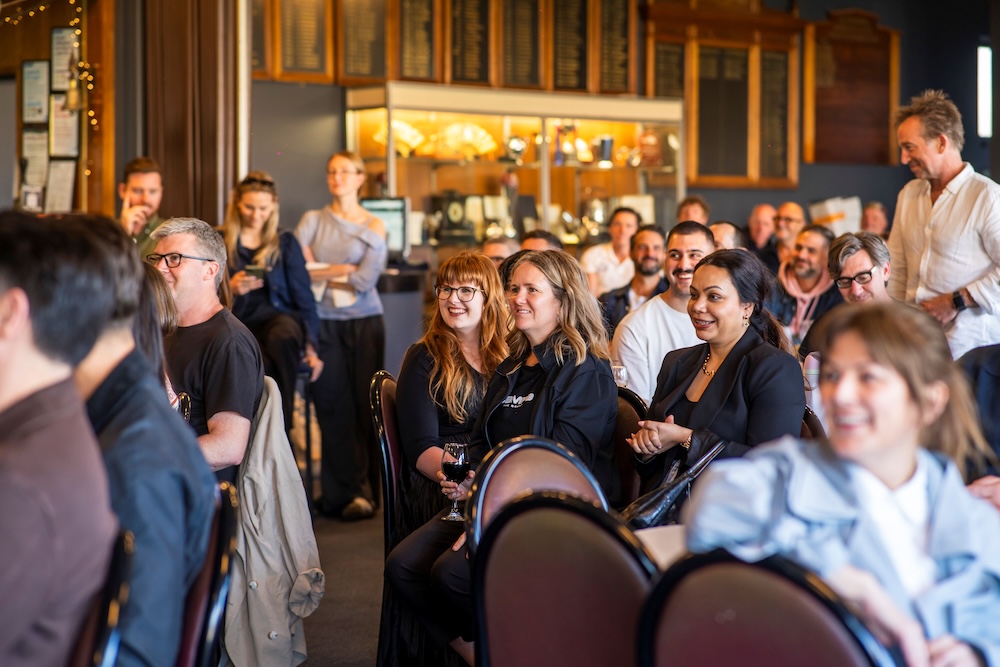
More than 130 advertising, media, production and tech professionals representing 47 agencies, industry bodies, and clients, recently gathered at The Open Table event held in Melbourne, to watch Matt Lawson, Co-founder and Chief Creative Officer at ATime&Place take on Chat GPT in a live discussion moderated by Neville Doyle, Strategic Client Partner at Ideally.

The discussion covered a range of topics that both challenged and acknowledged AI’s powerful abilities and overall potential effect on the creative industry.  ChatGPT demonstrated this live, generating answers with agility and depth in real time, with both Lawson and Doyle acknowledging its utility as a tool for speed and iteration.
But after debating ChatGPT on a number of issues, Lawson ultimately drew the critical distinction:  “AI creativity is derivative, and sure we’ve had a prolific few centuries of human art and culture for it to regurgitate. But it is up to us to make the lateral leaps that create the wildly new. If not, we are heading towards a hellish blandscape. That’s my real fear with AI. Sure, it’s going to enslave us all one day, but I’m more worried about the boring stories and art it will inflict on us before that happens.”

He also expanded on the intangibles that define great creative work, saying: “The best ideas come from life, from relationships – and from what I tell, the life of AI consists of trawling through a near infinite amount of data. That’s no life. AI will help us communicate in new ways, at wonderfully accelerated speeds, but it’s up to us to make those ideas human and give them real meaning. It’s up to us to lead the robots, or the future is going to be really boring. How horrible.”

In a wide-ranging debate, the panel also talked through whether creative roles could be fully replaced by AI, with even ChatGPT ultimately agreeing that it wasn’t totally possible.  It noted that if a role can be fully replaced by AI, it’s likely because that role had become repetitive and process-heavy, devoid of the creative judgment that makes work meaningful.
The Open Table’s event organiser and founder of Blue Bateau Deanne Constantine said the potential effect on the next generation of creatives had been a big discussion point throughout the industry in 2025, and one the panel was keen to address during the debate.

When asked by an audience member about how to ensure AI doesn’t kill the learning journey for juniors, Constantine said ChatGPT offered a thoughtful response, saying “it’s all about using AI’s power, but in a way that handles repetitive tasks while preserving space for young talent to experiment, make mistakes, and grow. It’s clear from this that mentorship becomes even more critical in an AI-assisted world.“

The entire debate reinforced that an AI world is actually a positive one for the creative industry.  Future roles will be shaped by how well creatives wield AI, with new hybrid positions likely to emerge including AI directors, prompt strategists, and story engineers.“

But ultimately the craft becomes more important, not less. So despite fears that AI might homogenise creative output, the night reaffirmed the opposite: that the human creative instinct, community, humour and shared experience still lead – and always will.”

In an address to the entire audience prior to the debate’s conclusion, Sarah McGregor, National Executive Creative Director of AKQA, encapsulated what the debate had found: “Fear has always walked beside creativity – but so has opportunity. Every new technology looks scary until someone makes something beautiful with it and if we stay curious instead of scared, we win.”
Campaign Brief, June 2025

Beyond the Brief: How ATime&Place Brewed Balter’s ‘Beers Do Come True’ Campaign with the Acronym the Universe Was Waiting For

“Believe you can have a beer. Ask for a beer. Receive a beer.” That’s the rally cry in Balter’s latest campaign, ‘Beers Do Come True’ that cheekily positions good beer as the most attainable dream of all. In this edition of Beyond the Brief, Campaign Brief chats with the writers behind the new campaign: ATime&Place Co-Founder Matt Lawson, ECD Charles Baylis, and Copywriter Andy Matthews about writing with restraint, casting the perfect anti-hero, and how constraints breed creativity.
What was the brief from Balter, and what were they hoping to achieve with this new campaign?
Matt Lawson: Essentially, bring Australia’s number one craft beer, Balter, to the mainstream.

Charles Baylis: Last campaign we showed that good beer is for everyone (not just those usually seen in beer ads) with the beer musical "We Love Good Beer."

Matt: And now, we wanted to show that good beer is a dream that anyone can achieve, quite easily in fact. It won’t happen overnight, but it probably will.

Andy Matthews: And as always, for Balter, do it in a way that celebrates beer, with a smile.
How did the idea of “Beers Do Come True” come about?
Matt: It came from the thought that we are being sold dreams everywhere we look, and often, they’re not attainable to all. But unlike most products, with beer, rich people don’t have a better version. So, good beer really is an attainable dream.

Andy: And all you need to do is reach out and take it! And of course, pay. And leave a tip if service has been good. It’s that simple!

Charles: And unlike most dreams, when achieved, beer is always as good as you thought it was going to be. Usually better. Especially a Balter. We actually did spend a lot of time talking about how grateful we were for beer. We are so lucky to be at the delicious end of ten thousand years of beer evolution, and, on a planet that has all the necessary ingredients for beer to come to life. And this gratitude just needed to be expressed. In a really beery way.
In a world of unattainable dreams, you’ve gone the other way and said: “This one’s within reach.”
Why do you think that message hits home right now?
Andy: We feel people are getting sick of “hustle culture”; achieve your dreams with these 50 tips before 4am. So, it’s always good to puncture something that takes itself so seriously.

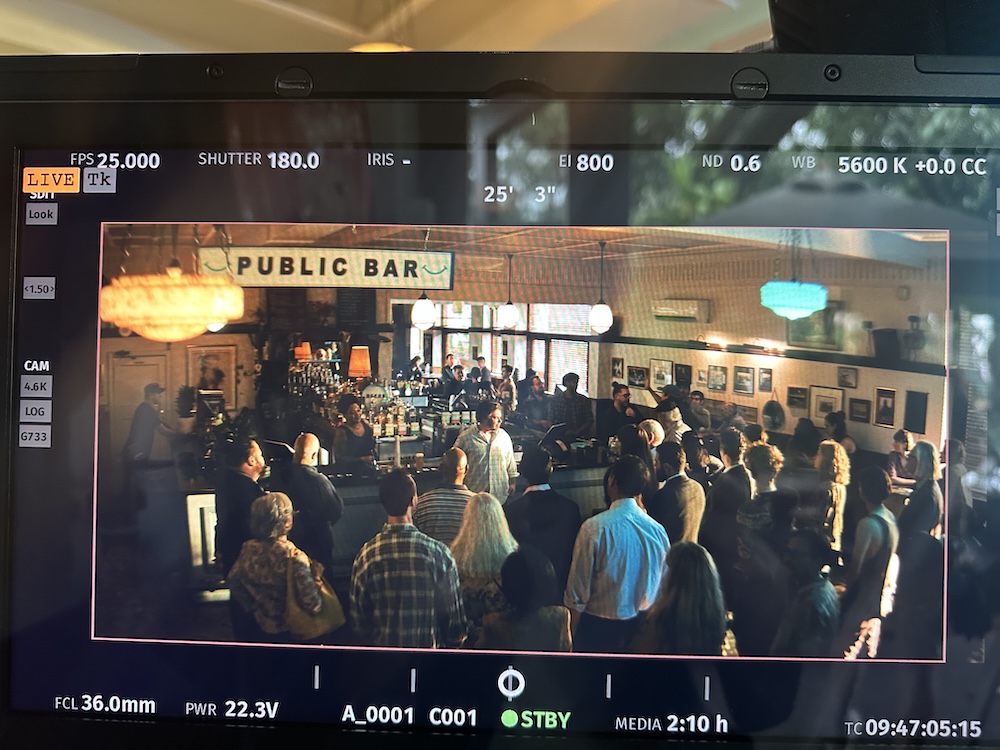
Matt: In tougher economic times, or any times to be honest, it’s always good to remind ourselves that simple things are great. And it shouldn’t take much to make us happy. A cold beer, some friends, a cosy pub. Perfection.

Charles: But maybe we’re even taking ourselves too seriously now. We tried to celebrate beer, have some fun with it, and maybe some of that landed.
“Believe you can have a beer. Ask for a Beer. Receive a Beer.” It’s ridiculous in the best way. What was the origin of that script, and how far did you push it before landing on the final version?
Matt: It was a simple premise: Someone tries to convince a crowd to get a beer while being the one thing stopping them from getting it. But the self-help-motivational-speaker-success-mentor world is so rich that we did enjoy going wide before reigning it in. Plus, we’re all writers, so it was only a deadline that stopped us from constantly crafting and changing things.

Charles: We also workshopped it with the Balter creative team, Ben Trueman and Stirling Howland (Stirling being one of the founders, too), and both great creatives, so it was good to have a writer’s room to throw stuff out there and see what stuck. It was fun writing for an annoying character that lacked self awareness but no confidence.

Matt: I had to dig deep to find that voice.

Andy: And on the B-A-R line specifically: I feel we can’t claim credit for this line. Sometimes it feels like, if the territory is strong enough – the lines are just out there, in the universe – waiting to be plucked into existence. We were riffing this idea of the motivational speech about getting a beer, and we started saying ‘Believe you can have a beer… ask for a beer … and before we even got to “receive a beer” some part of my brain said ‘I’ve got a feeling that whatever comes next we will make this spell out BAR’ – and sure enough it did. It felt like a self-fulfilling acronym. It had been waiting for someone to say it, all this time. For hundreds of years, that word has been in front of people’s faces as they order a beer and its true meaning has finally revealed itself to us.
The lead character really does nail it. How did you approach casting, and what were you looking for in that performance?
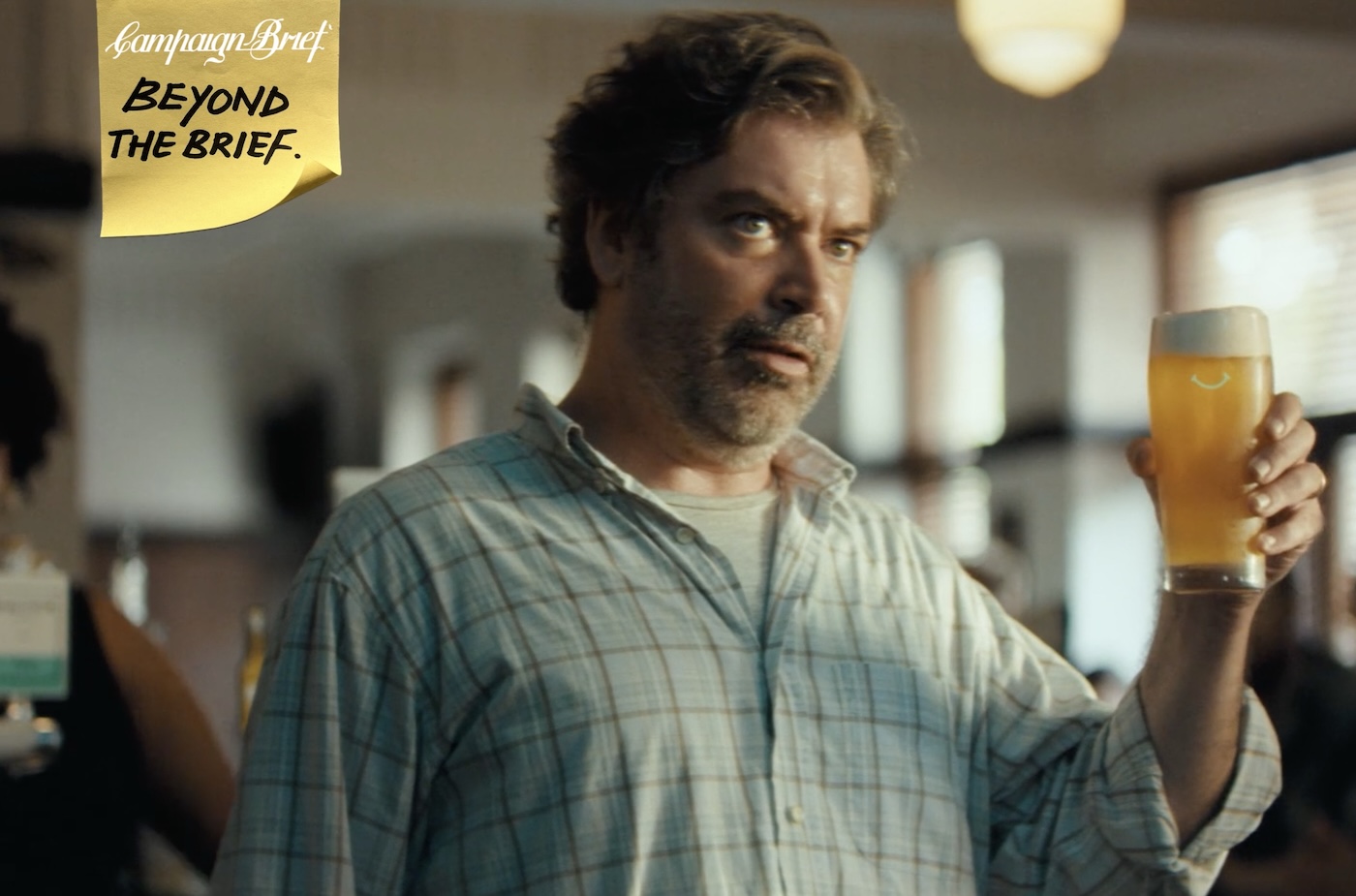
Matt: You know what, it was brave of Balter to make the most annoying person in the ad the person holding their beer, with the rest of the pub looking at him in disdain for the entire time. He’s really an anti-hero, anti-influencer, so he did need something endearing about him or you may tune out, or hate him, and the whole ad wouldn’t sell.

Charles: We were looking for someone who on the surface doesn’t look like they have “everything”. But, they have a message of success for all. And usually, when self-righteousness rises, self awareness drops, so they had to be unaware of how they’re coming across to the people they’re preaching to.

Andy: And we knew that if that first line, “I know you look at me, and think…he’s got everything” landed, then, we’d have the audience, and also, our guy. So, we really looked for someone who could nail that.

Charles: We’re so lucky that Director Ariel Martin and ourselves found Duncan Fellows. He’s a hugely talented actor, and he’s funny because he understands comedy comes from reality. He just played the truth of this character, and with perfect timing. It’s almost impossible to imagine anybody else doing it so well.
Comedy can be notoriously hard to get right, especially in ads. What’s your approach to making something funny actually land?
Charles: Casting, of course. And timing. Comedy is a game of frames in the edit, and on the day.

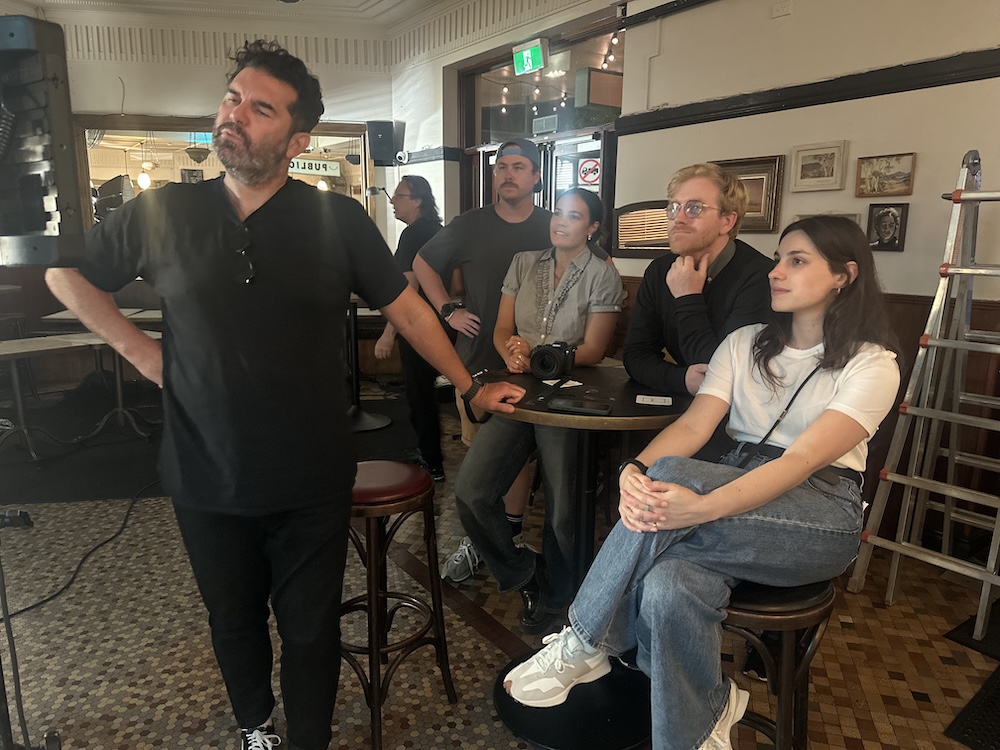
Matt: And I think for this one in particular, but it is often the case, the sillier the premise the more serious you have to take it. And that’s why we were drawn to Ariel Martin’s work. He seems to find the truth in an idea and not shoot for the gag. And then we worked with an actor we trusted understood the idea, and how heartfelt this needed had to be, to be the most ridiculous.

Andy: Also, I would say that ironically, maybe one of the mistakes people make with comedy is trying to write jokes. Matt was very consistent in reminding us all to not write any, and take them out of the script if we did. When you have a core idea that is funny, that has irony built into its very framework, sometimes the best thing you can do is get out of the way and just let that idea play out. We reckon, and hopefully it comes across, that a person giving a motivational speech about buying a beer to an audience he is stopping from buying a beer, is an inherently funny idea. So, then you can just try and stay true to that character and that premise and the comedy will follow.

Matt: It is also good to leave room for magic on the day. We had a clear vision of what we thought would work, and be funny, the intent of each line, which Ariel shared, but he was great in ensuring room in the performance (and schedule) to improvise, and play. The little addition of “beautiful eyes” to the line, “I once knew a man who had nothing but the hope in eyes, just like you…beautiful eyes”, was improvised on the day from Duncan. It was a small ad lib but really funny, and all we needed to do was find the right person to have that said to.

We knew a line of improv would help the rest of his performance feel more off-the-cuff, but it also became one of my favourite, and perhaps vital, moments in the spot. It makes our “annoying” lead instantly more endearing just when you need it. It did a lot in two words, and so, I’d just say be open to those little unplanned moments, and work them in.
From a creative point of view, what’s the biggest challenge when working in the beer category right now?
Charles: There’s so much great beer work that’s already been done. So, you need to make people thirsty, with all the cues that come with it, but avoid being cliched or going over ground that’s already been covered.

Matt: It needs to look like a beer ad, but not like another beer ad.

Andy: Then there’s the ABAC regulations, of which there are more than ever, which dictate that you can’t associate drinking beer with an emotional transformation. Of course, associating a product with an emotional transformation is pretty much route one for advertising, so while it might seem restrictive, all they’re really doing is saying you can’t be lazy. It actually drives creativity – forces you to find a new way of thinking, of making your product the central part of a conversation. I think the regs are actually one of the reasons so many great ads are beer ads.

Matt: Yep, often, creativity thrives under constraints. So, thank you ABAC. There, we’ve said it.
How does “Beers Do Come True” reflect the kind of creative ATime&Place wants to put into the world?
Matt: It seems like there’s momentum behind the idea, “Beers Do Come True”, and we do hope that it’s an enduring platform for Balter. And that’s what we’re trying to do, create solid platforms that build interesting worlds. Wide worlds that allow for stories, innovation, new products, services and whatever else is needed to make a brand more meaningful, motivating and memorable.

Charles: And also, we’re always looking to create work that hijacks, or talks to the times we’re in. We’re calling this sort of idea a Zeitheist. Did we just rename topical thinking? Maybe, but it’s more fun to say, feels bigger, and is ours now as it’s in the press. Zeitheist.

Matt: And I’d say that we’re not afraid to give comedy a go. It’s not right for everything, but when it is, it’s powerful. But maybe this is me doing exactly what our hero does in the ad, selling something people already know and want, “Has anyone here tried…laughter? Think of it as a smiling hiccup scream that people seem to enjoy.”

Charles: Speaking of smiling hiccup screams, thanks to the entire Balter crew, and Ariel and the Scoundrel gang, for making this one so fun.

Matt: Absolutely, thanks, it was a real treat. Beers do come true, everybody. Beers do come true. See, people are already, and so naturally, using it in conversation. Beers do come true.